
London-based AI startup 01C has officially launched Amara, an AI-powered platform that allows designers, game developers, and 3D artists to generate and iterate complete 3D environments in seconds using simple text or voice prompts. Built natively for Unreal Engine, Amara aims to remove one of the biggest bottlenecks in digital production: the time and labour required to build detailed, interactive environments.
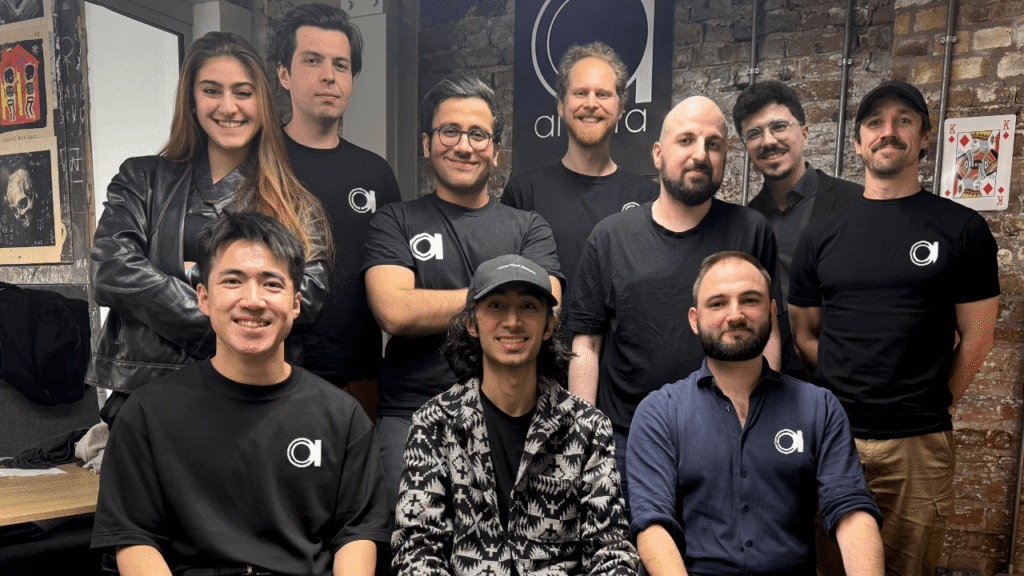
Founded by National Film and Television School graduates Ashkan Dabbagh, Rupert Aspden, and James Elkin, 01C brings together AI researchers and veterans from the games and film industries. In June 2025, the company raised €500,000 backed by EWOR, a highly selective fellowship that supports a small cohort of top global founders.
From hours of manual work to instant environments
Environment creation has traditionally been one of the most time-consuming parts of game and digital production, involving asset placement, lighting, physics setup, and repeated refinement. Amara compresses this process into seconds by allowing creators to describe environments conversationally, with AI handling the technical execution.
At the core of the platform is a 3D Mesh Generator that produces production-ready assets on demand and integrates directly into Unreal Engine workflows. Rather than forcing teams to adopt a proprietary ecosystem, Amara is designed to fit into existing pipelines.
“We don’t want developers to change their tech stack,” said Dabbagh. “We want to integrate into workflows they already use and help them move faster.”
The platform supports both text and image-based prompts, enabling users to generate interactive 3D assets for games, animation, virtual production, or even physical output such as 3D printing.
Why native 3D beats video generation
While generative video models can create visually striking results, Dabbagh argues they fall short for interactive use cases. Video-based systems regenerate frames continuously, leading to inconsistencies that break immersion and functionality.
“In games, every object needs permanence,” he explained. “Assets need physics, predictable behaviour, and reliability. You can’t build large-scale interactive experiences on regenerated pixels.”
Amara generates true 3D objects rather than flattened outputs, allowing creators to extract, modify, and interact with individual assets. This makes the platform suitable for complex productions where stability and editability are essential.
Lessons from early access and real-world use
Before its public launch, Amara was used internally to produce more than ten viral campaigns for brands including McLaren, eBay, and Twix, generating over 40 million views through organic growth alone.
Early testing revealed that the platform was not about replacing designers but amplifying their impact. While creatives embraced the tool, many companies preferred professionals to operate it rather than running it independently.
“That confirmed for us that creative storytelling is still central,” said Dabbagh. “We’re removing friction from execution, not creativity.”
Empowering smaller studios and creative teams
Amara has particular relevance for smaller studios competing with well-funded players. Large studios can absorb long production cycles, but indie teams often struggle to achieve comparable quality with limited resources.
“If something takes two weeks manually and we reduce it to two days, that changes what’s possible,” Dabbagh noted. “It levels the playing field.”
The platform also extends to film and television production. With Dabbagh’s background at Warner Bros, Amazon Studios, and DNEG, he sees Amara enabling directors to modify environments live during shoots, reducing delays and costly reshoots.
What comes next for 01C
Following the launch, 01C plans to onboard major B2B clients, expand internationally beyond Europe and the US, and prepare for a future fundraising round. The team also aims to triple in size as product development accelerates.
“Our goal is to keep creators in a flow state,” said Dabbagh. “There shouldn’t be a barrier between imagination and execution. We’re not replacing creators, we’re changing the effort required to bring worlds to life.”