
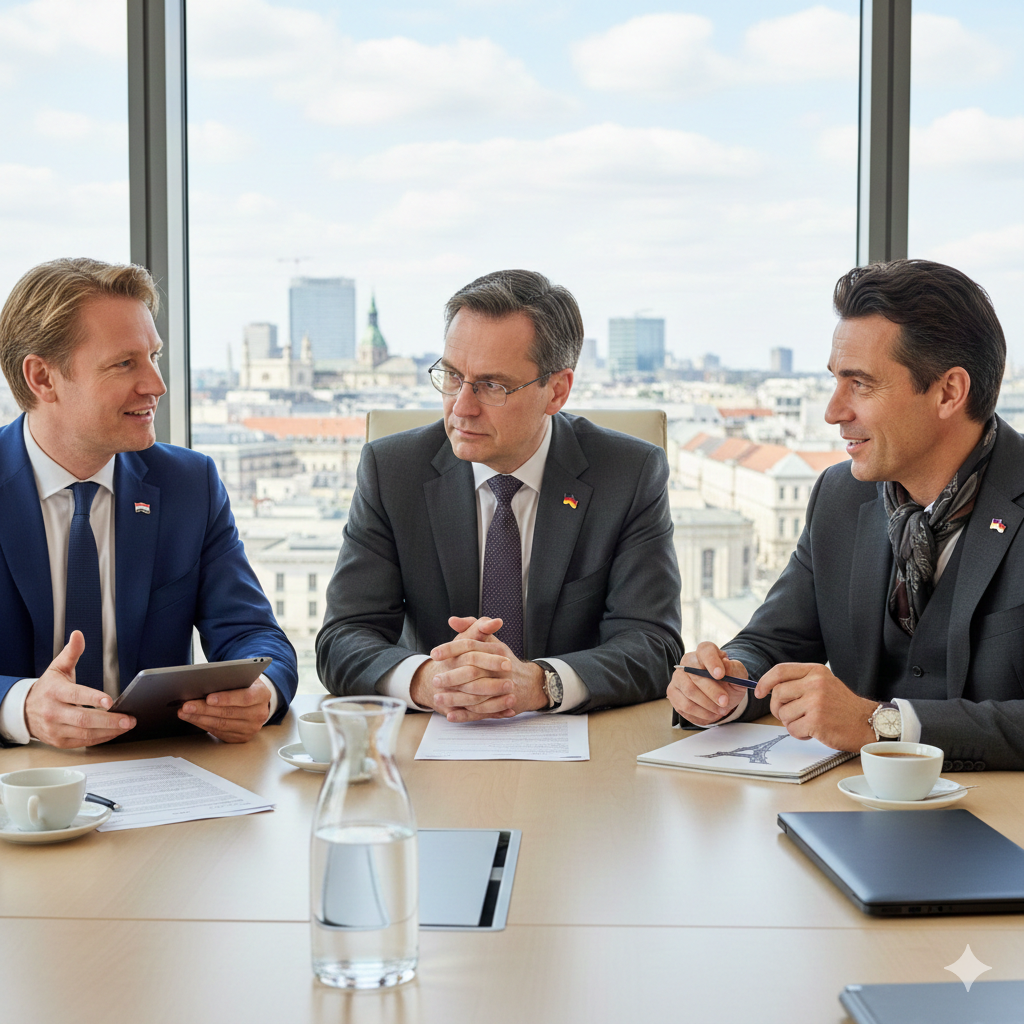
If you have ever watched a deal meeting go sideways with two perfectly reasonable teams, it was probably not about product fit, or it was about tone boundaries. The Dutch person spoke plainly. The German counterpart found that to be blunt and unsafe. The French team read both through a lens of formality and rhetorical polish. Small differences in how we ask questions and frame answers add up fast.
This is a practitioner’s guide grounded in research and experience on how to change your language and behaviour to get to ‘yes’ faster.
What the cultures actually look like in practice
The Netherlands prizes “saying what needs saying.” Conversation is performative in the sense that candour signals competence and equality. That blunt honesty is a feature, not a bug. It shortens meetings and pushes issues into the open quickly. Research comparing German and Dutch workplace interactions reveals recurring friction when Dutch directness clashes with German expectations for structure and formal processes.
Germans also prize directness, but it comes wrapped in systems. In German business culture, the preference is for clarity, supported by documentation, a hierarchical approach where appropriate, and careful risk analysis. Direct criticism can be normal. What changes everything is when critique lacks the scaffolding that German partners expect. When a Dutch peer says “this will not work” without the “here is why and here is the mitigation”, the German side hears a threat, not a challenge.
The French approach is different again. French business language prizes rhetorical control, formality and argumentation. People expect a certain register. A blunt “this is broken” from a Dutch speaker reads as graceless. A German’s insistence on a detailed process can seem tedious to the French because they favour debate and a clear lead voice. Expatica’s practical guides and academic work on French etiquette underline how register and protocol shape business expectations in France.
Hofstede’s style dimensions help explain what is at stake. Germany scores high on uncertainty avoidance, which explains the appetite for documentation and testing. The Netherlands scores high on individualism and low on power distance, which encourages egalitarian bluntness. France sits differently on the power distance and formality spectrum. These patterns are not excuses for stereotyping. They are maps for how to phrase the same point so it lands the way you intend.
Why directness “kills” deals with Germans
It is not that the Dutch are rude. It is that they often remove the logic ladder that Germans expect. German interlocutors require a concise diagnosis, along with the evidence trail and mitigation plan. Give them the diagnosis only, and they rightly ask for the trail. If you cannot produce it on the spot, that erodes trust. That is why an offhand dismissal can stall a negotiation even when both sides agree on core terms.
Practical consequence one: Germans will respect candour once the structure is visible. Practical consequence two: if you are on the Dutch side, do not stop at “no” or “this will not scale.” Add two things. First, the reason in one sentence. Second, the proposed experiment or mitigation in one sentence.
How to reframe without softening your point
If you’re Dutch and you tend to state things exactly as you see them, you don’t need to silence that instinct. What usually works better in Germany is changing the wrapper around your message. Start by naming the problem in straightforward language, so no one feels blindsided. Then anchor your point with a quick piece of evidence or the decision metric you are examining, as the receiver responds well to signals of structured thinking. Once the context is set, shift into a proposed mitigation or a clarifying question that invites joint problem-solving. The directness stays, but the framing signals that you’re building toward a shared solution rather than delivering a unilateral verdict.
For Example,
“This integration will add 30% latency when one supplier fails. That raises our SLA risk. Can we test a fallback route or cap calls per minute while we pilot?”
If you are German, meeting Dutch directness, ask one calibrating question that converts bluntness into data.The question should not be a challenge but a translation key which moves the conversation from judgment to shared evidence.
For example,
“Can you show what metric you used to reach that conclusion, or is this experience-based?”
What to do with French counterparts
When interacting with French interlocutors, be mindful of tone and rhetorical form. Present your point with a brief framing sentence that signals respect for hierarchy and language. Open by acknowledging points of agreement. Then introduce the hard line with a crisp argument and a closing question. You should be able to preserve the French preference for graceful argument while keeping the pace.
For example,
“I agree our go-to-market is strong. There is, however, a legal exposure in market X if we execute this pricing. I propose that we conduct a legal check and a corridor test. What will be the fastest way to validate this from your side?”
Practical scripts you can use during meetings
When someone says “that will not work”, try:
“I see the risk. Here is the metric that moves for us and the test we can run in two weeks to check it.”
When a German asks for evidence, and you do not have it, try:
“That’s fair. I will share the metric and two supporting examples by Wednesday. Meanwhile, can we agree on a temporary guardrail?”
When a French senior leans on rhetoric, try:
“I appreciate the view. To move forward quickly, could we get a short legal or market check and align on the recommendation by Friday?”
Final note
Communication style is not a reflection of your personality, but rather an expression of your negotiation assets. The most successful founders and operators I know are those who can speak with Dutch brevity, switch into German evidence mode and then reframe for French rhetorical norms, all within the space of a single meeting. That is not inauthentic, but is rather a show of your competence.