
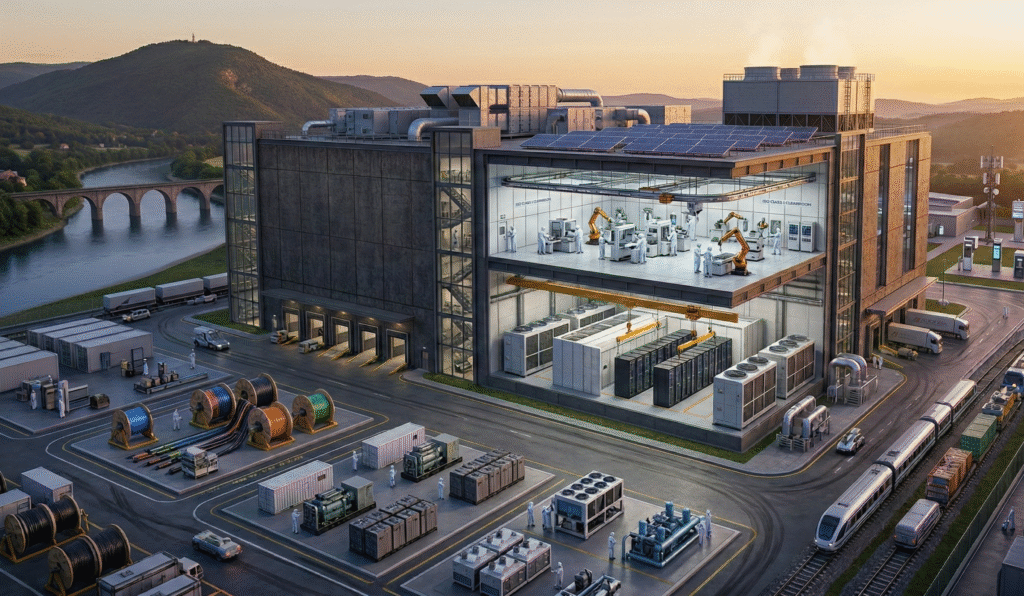
The European climate technology sector is currently trapped in a massive capital failure. Software venture capital models are entirely unsuited for decarbonizing the industrial economy. Building a first-of-a-kind commercial facility requires hundreds of millions of euros in upfront capital expenditure. This creates the FOAK valley of death. Traditional venture equity is mathematically too expensive to finance concrete and steel. Conversely, conventional commercial banks refuse to underwrite unproven technology. Bridging this specific financing gap is the single greatest challenge for European deep tech investors in 2026. General Partners who fail to solve this capital structure problem will watch their most promising climate assets suffocate before pouring a single yard of concrete.
The Project Finance Deadlock
The immediate instinct of a naive climate founder is to secure project finance debt from central European banks to build their flagship facility. This strategy inevitably fails for First-of-a-Kind infrastructure. Commercial lenders operate on strict risk models that demand historical operational data and guaranteed cash flows.
Neither a novel hydrogen electrolyser nor a next-generation battery recycling plant has any historical data. Bank credit committees view FOAK infrastructure as binary technology risk and will immediately reject the loan application. They fund deployment risk, not technology risk. This forces climate founders into a brutal deadlock: their equity is too expensive to use for construction, and cheap debt is completely inaccessible.
Separating Corporate and Project Equity
Sophisticated boards solve this deadlock by fundamentally separating technology risk from execution risk. Venture capital is explicitly designed to absorb technology risk. It funds laboratory breakthroughs, elite engineering salaries, and pilot plants.
However, once a climate startup attempts to build its first commercial-scale factory, deploying standard venture equity becomes highly destructive. Diluting the founding team by sixty per cent simply to purchase industrial real estate destroys all future incentive structures. Top-tier climate funds now require founders to spin up a distinct Special Purpose Vehicle to house the physical factory assets. The venture fund injects standard equity into the corporate parent company while structuring entirely different capital instruments for the facility SPV.
Engineering the Blended Capital Stack
Solving the FOAK capex problem requires engineering a blended finance structure. Climate funds now employ dedicated project finance specialists to layer multiple tranches of capital. The base layer relies heavily on sovereign catalytic capital.
Institutions like the European Investment Bank and various national green transition funds deploy massive non-dilutive grants and concessional loans specifically designed to absorb the initial technology risk. Securing these state-backed guarantees is the only way to crowd in private commercial debt. Major intelligence outlets like Bloomberg Green and the PitchBook Climate Tech Reports consistently highlight that sovereign blended finance is the definitive catalyst for European industrial decarbonization. Without state-subsidised first-loss capital, the private debt markets simply refuse to participate.
The Bankable Off-Take Imperative
The ultimate key to unlocking commercial debt for the remaining capital stack is the bankable off-take agreement. Lenders do not care about the elegant physics of a new carbon capture technology. They only care about guaranteed future revenue.
Founders must secure legally binding forward contracts from major industrial buyers before initiating construction. These advanced market commitments demonstrate to the credit committee that the factory will generate predictable cash flow from the moment it becomes operational. Securing these agreements often requires integrating the startup directly into the supply chain of an industrial giant. If a founder cannot convince a corporate buyer to sign a forward contract, the technology is not commercially viable, and the venture fund should immediately halt all capital deployment.
The Climate GP Playbook
The modern European climate investor must operate as a hybrid financial engineer. You cannot build the green industrial revolution using standard SaaS term sheets.
Capital allocators who attempt to fund steel plants with Series B equity will simply incinerate their management fees and fail their Limited Partners. The alpha in climate tech belongs entirely to the General Partners who can successfully navigate the project finance deadlock, secure sovereign guarantees, and architect the SPV structures required to scale physical infrastructure.