
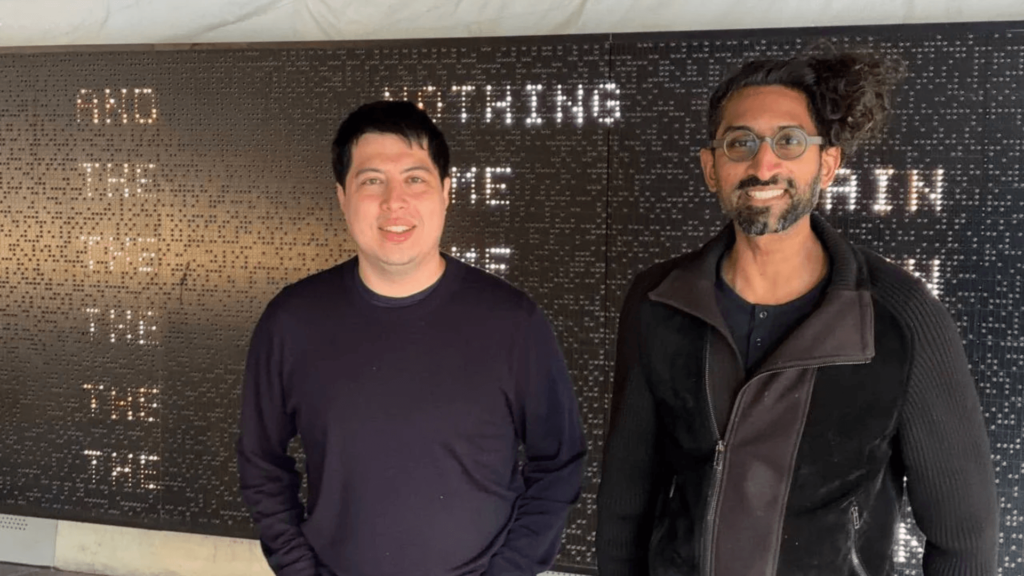
The $2.2 million pre seed round was co led by Frachtis and Metaplanet, the investment firm of Skype co founder Jaan Tallinn. Tallinn is known for leading Anthropic’s $124 million Series A funding round in 2021, making his backing a notable addition to Sequent’s early investor base.
The investment will help Sequent take its flagship product, Alan, from early access towards a full commercial launch. The company plans to use the capital for engineering, sales and marketing recruitment, as well as the computing resources required to operate its AI platform.
Alan Combines AI With Mathematical Proof
Alan is designed to help developers define precise rules for how their software should behave and then determine whether the code satisfies those requirements.
For example, a developer working on a financial application could specify that users must never be able to withdraw more money than their available balance. Alan analyses the code and searches for a mathematical proof that the stated condition holds.
This process is known as formal verification. Unlike conventional software testing, which checks selected scenarios, formal verification can establish whether a specified property holds across all executions covered by the mathematical model.
Importantly, Sequent does not rely on AI alone to validate its results. Every proof generated by Alan must be checked by HOL4, an independent theorem proving system that verifies the mathematical reasoning. This additional layer is intended to prevent incorrect AI generated proofs from being accepted as evidence of software safety.
A Security Incident That Inspired the Startup
Sequent’s origins are closely connected to a vulnerability in Vyper, a programming language used to develop Ethereum smart contracts.
Chief executive Charles Cooper is a core developer of Vyper. In 2021, he inadvertently introduced a flaw into its compiler, the software that translates source code into instructions executed by a blockchain. Although the vulnerability was corrected within months, smart contracts already deployed using affected compiler versions could not simply be updated.
In July 2023, attackers exploited the vulnerability to steal more than $50 million from older liquidity pools on Curve Finance and other projects.
Following the incident, Ramana Kumar, Sequent’s co founder and chief technology officer, offered to help establish the mathematical correctness of the Vyper compiler. Kumar previously worked as an AI safety researcher at Google DeepMind and has expertise in formally verified software.
That collaboration eventually developed into Sequent. Curve Finance has since become the startup’s first paying customer, using its technology to verify important safety properties of its smart contract pools.
Expanding Beyond Blockchain Security
Sequent is initially concentrating on blockchain smart contracts, where software vulnerabilities can directly expose digital assets to financial losses. Alan currently supports Vyper, while the company is working towards compatibility with Solidity and the Solana ecosystem.
The longer term opportunity extends beyond cryptocurrency. Financial institutions, government agencies and businesses operate large software systems that can contain vulnerabilities even when their underlying code is not publicly accessible.
Cooper believes AI powered cyberattacks are making traditional approaches to protecting software increasingly insufficient. He argues that advances in AI are also making mathematical verification more economical, potentially allowing organisations to prove important software properties without relying entirely on expensive specialist teams.
With its new funding, Sequent aims to make formal verification more accessible to developers and security teams. Its next challenge will be demonstrating that AI assisted mathematical proofs can deliver reliable protection across a much wider range of software systems.