
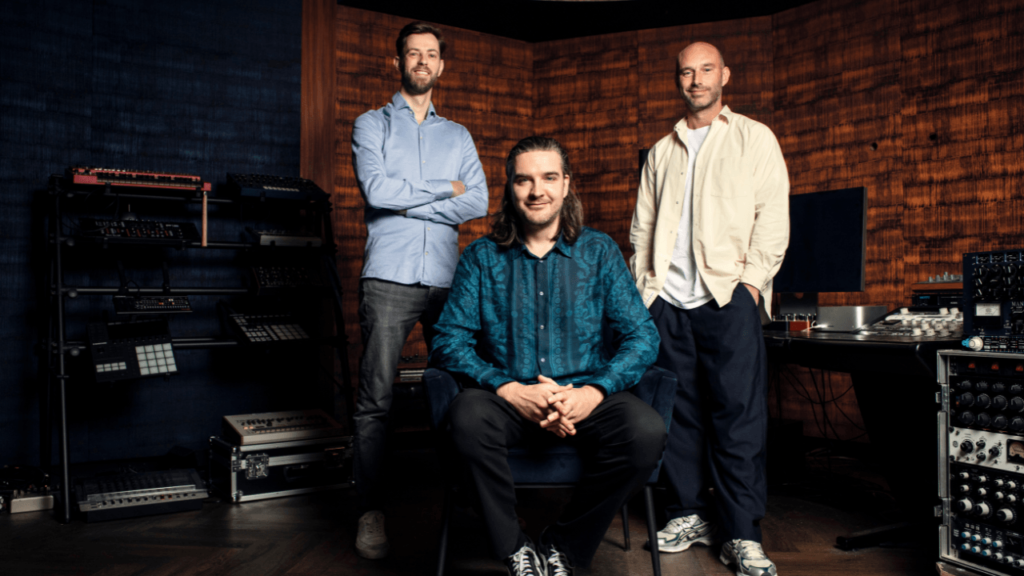
Artificial intelligence can now generate a complete music track in seconds, but a major question remains: who gets recognised and paid when an AI generated song draws on existing artists’ work? GasLab, a new generative AI music platform founded by Dutch DJ and producer Reinier Zonneveld, aims to address that challenge by building attribution and compensation directly into the music creation process.
The company has launched with $1 million in pre seed funding to develop a platform where participating musicians and record labels can contribute their music to AI training and share in the value generated by resulting tracks. Investors include Eric Demuth, co founder and executive chairman of Bitpanda, and Bas Beerens, founder of WeTransfer, alongside other European entrepreneurs.
Building a Fairer Model for AI Music
GasLab, short for Generative AI Solutions Lab, is designed around a central principle: artists should know how their work contributes to AI generated music and receive compensation when it creates commercial value.
Unlike platforms that may offer limited visibility into the material influencing generated tracks, GasLab intends to work exclusively with music provided by artists and labels that agree to participate. This approach aims to give rights holders greater transparency and control over how their catalogues are used.
The platform is being developed to connect AI music creation with a system for identifying contributing artists, recording rights information and distributing revenue.
Digital Notary Tracks Musical Contributions
At the heart of GasLab is its proprietary attribution technology, called Digital Notary. The system compares generated music with the participating catalogue and creates a record identifying the music and rights holders that contributed to the output.
The process is designed to account for both master recording rights and publishing rights, which can belong to different parties. Each generated track receives a permanent identification number and a watermark linked to its attribution record.
This information forms the basis of GasLab’s proposed compensation model. When the platform generates revenue through subscriptions or music releases, contributing artists and rights holders can receive a share based on their recorded contributions.
The approach is intended to ensure that creators can benefit if an AI generated track becomes commercially successful, rather than seeing their work used without a clear connection to the resulting revenue.
From Electronic Music to AI Research
Zonneveld began studying classical piano at the age of three before teaching himself electronic music production. He launched the Filth on Acid record label in 2017 and has become known for his electronic music performances, including a world record for the longest electronic music live set.
His interest in AI music developed alongside long time friend and business partner Cas Luuring. The pair began working with machine learning around eight years ago, eventually leading Zonneveld to create R2, an AI model trained on his own music catalogue. He has performed alongside the model at festivals.
The company’s core team also includes Thijs Emondts, a former venture capital partner and Uber general manager.
Zonneveld said his background in economics and mathematics encouraged him to explore the possibilities of algorithms in music, but argued that technological progress should not come at the expense of musicians’ livelihoods.
Funding Supports the Next Stage
The $1 million investment will help GasLab develop its platform and move towards a wider launch. The company also sees potential for its attribution technology to serve other generative AI platforms beyond music.
For now, GasLab is inviting interested users to register for private testing, ahead of a broader public release. Musicians, labels and other music rights holders can also contact the team to explore participation.
A New Question for the Music Industry
As generative AI changes how music is produced, attribution and compensation are becoming central issues for artists, labels and technology companies.
GasLab is betting that transparent records and revenue sharing can help build trust between the creative industry and AI developers. Its challenge will be proving that its system can accurately identify contributions at scale while creating a commercially sustainable model for everyone involved.