
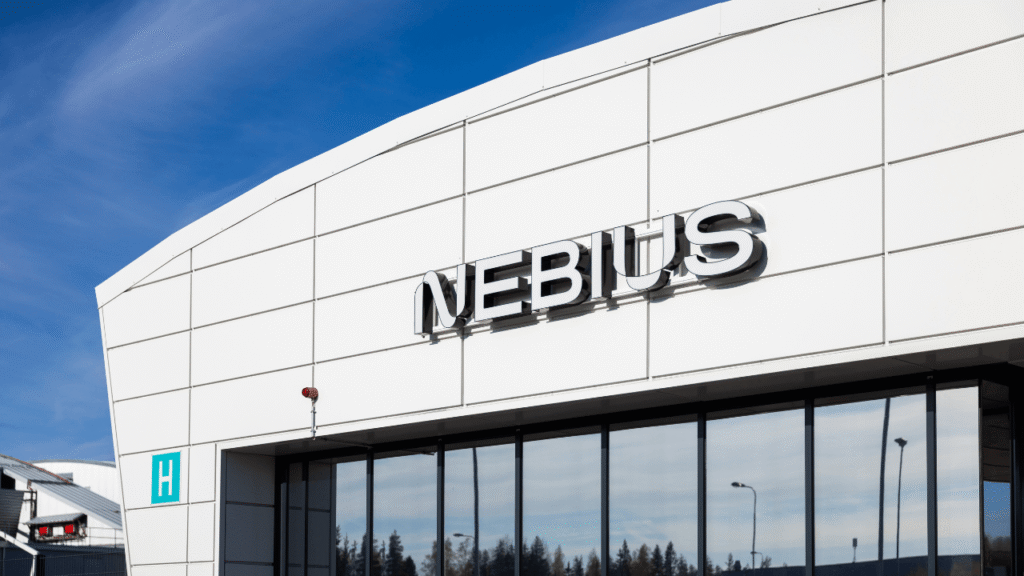
As Britain competes to become a global centre for artificial intelligence, access to powerful computing infrastructure is becoming a decisive advantage for emerging AI companies. European AI infrastructure provider Nebius is strengthening its UK presence by working with early stage AI labs, seeking to give ambitious developers the computing capacity needed to build advanced models and bring new technologies to market.
The Amsterdam headquartered company is expanding its infrastructure and commercial operations as demand for AI computing continues to rise. Although Nebius has not publicly identified the early stage UK labs it is working with, the move highlights the growing importance of specialist cloud providers in the race to develop next generation AI systems.
A £1.7 Billion Investment in UK Infrastructure
Nebius announced in June 2026 that it was committing approximately £1.7 billion to expand its UK infrastructure across four sites, alongside growing its London hub. The expansion includes three new deployments of NVIDIA infrastructure, with the combined capacity expected to reach 65 megawatts when fully ramped up in 2027.
The company describes its London office as a key European centre for research and development, commercial operations and market expansion. The additional infrastructure is intended to give British businesses, researchers and public sector organisations access to computing resources needed to train and deploy AI systems locally.
Why AI Labs Need Specialist Computing Power
Nebius operates what is commonly known as a neocloud, a provider that builds AI focused computing infrastructure and makes it available to companies developing and operating artificial intelligence applications.
Its platform combines high performance graphics processing units, networking, storage and software designed for AI workloads. Customers can use these resources for model training, experimentation and inference, the process through which trained models generate responses or predictions.
For young AI labs, access to this infrastructure can reduce the need to build expensive computing systems independently. It can also help engineering teams scale experiments and develop products without diverting as much time and capital towards managing hardware.
Nebius offers access to GPU clusters ranging from individual machines to environments containing thousands of GPUs, supported by software and managed services for AI development.
Britain’s Emerging AI Lab Ecosystem
Nebius’s interest in early stage UK companies comes as a new generation of AI ventures emerges from stealth, the period when startups operate with limited public disclosure while developing their technology.
Examples include Ineffable Intelligence, founded by former DeepMind researcher David Silver, and Inherent, founded by people with backgrounds at DeepMind, Microsoft and the White House. Recursive Superintelligence, co founded by German computer scientist Richard Socher, is another company entering the emerging AI landscape.
These businesses operate in a competitive environment where access to experienced researchers, investment and computing resources can influence how quickly they progress. However, Nebius has not confirmed that these named companies are among the labs it is supporting.
Data Centre Concerns and Talent Mobility
Nebius’s expansion also comes amid public debate over the energy requirements, land use and local impact of large data centres. The company has maintained that such concerns should not automatically prevent investment, arguing that computing infrastructure is essential to the development of AI.
Talent mobility is another important issue. Nebius EMEA general manager Gary Tierney welcomed the UK government’s plans to ease restrictive employment non compete clauses, suggesting that greater freedom for workers to move between companies could encourage more startup formation and frontier AI development.
The Road Ahead
Nebius’s UK strategy combines physical infrastructure investment with efforts to serve the companies building AI products. Its £1.7 billion expansion and growing relationships with emerging labs reflect a broader shift in the AI industry, where computing capacity is becoming a core part of startup competitiveness.
The key question will be whether improved access to infrastructure, combined with Britain’s research talent and investment ecosystem, helps more domestic AI companies develop into globally competitive businesses.