
Back pain affects hundreds of millions of people worldwide, yet for many patients the journey to relief remains frustratingly uncertain. Appointments with specialists often provide only brief snapshots of a condition that develops over weeks, months, or even years. Between clinic visits, healthcare professionals have little visibility into how patients move during everyday life, making it difficult to understand whether treatments are truly working. UK health technology startup CurvLabs believes the missing piece is continuous movement data. By combining wearable sensing technology with intelligent software, the company is building a new way for people to monitor spinal health beyond the doctor’s office.
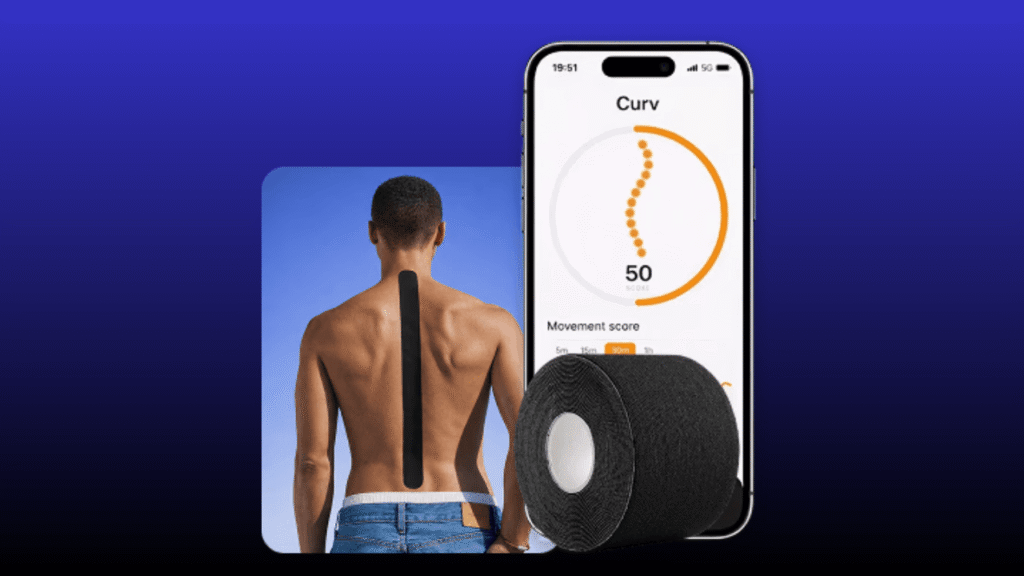
Founded by biomedical engineer Rohan Kotecha, CurvLabs has developed Curv, a wearable spinal monitoring system designed to analyse how the spine moves throughout the day and provide users with personalised insights into their movement patterns.
The idea emerged from Kotecha’s own experience with chronic non specific back pain, which he was diagnosed with at the age of 13. After years of consultations with physiotherapists, chiropractors, and osteopaths, he realised that despite countless appointments, he still lacked a clear understanding of how his daily movement affected his condition.
A Personal Problem Inspired the Solution
While studying biomedical engineering at University College London during the COVID 19 pandemic, Kotecha experienced another severe episode of back pain.
Faced with lengthy waiting times for treatment, he turned to private physiotherapy, where clinicians repeatedly explained that recovery depended largely on how he moved throughout the day rather than what happened during short clinical appointments.
That observation sparked a fundamental question. If movement outside the clinic matters most, why was there no way to measure it continuously?
At the same time, Kotecha was developing an electrocardiogram device as part of his university research. Seeing how wearable technology could continuously monitor heart activity inspired him to explore whether similar technology could be applied to the spine.
A Wearable Built Into Everyday Life
Curv’s technology is integrated into a flexible strip of kinesiology tape that is applied along the spine.
Embedded sensors within the wearable follow the natural contour of the back while collecting continuous movement data throughout daily activities.
Using Bluetooth connectivity, the device transmits information to a companion smartphone application that analyses spinal range of motion, movement speed, flexibility, and the mobility of different spinal regions.
Rather than requiring users to change their routine, the wearable quietly captures movement throughout the day, creating a much richer picture of spinal behaviour than occasional clinical assessments.
The hardware is manufactured in the United Kingdom, while earlier product development and rapid prototyping were supported through work carried out in Shenzhen.
Moving Beyond Traditional Posture Tracking
Unlike many posture correction devices that alert users whenever they slouch, CurvLabs deliberately took a different scientific approach.
Before developing the product, Kotecha consulted physiotherapists, clinicians, researchers, and academic experts while reviewing extensive medical literature on back pain.
The research consistently showed that maintaining a single perfect posture is less important than encouraging regular and varied movement.
Instead of encouraging rigid positioning, Curv focuses on helping users become more aware of how they move, supporting healthier movement habits that gradually improve confidence and reduce fear associated with chronic pain.
This evidence based philosophy shaped both the wearable and its software platform.
Turning Data Into Practical Health Insights
While the wearable collects movement information, the company’s software transforms that data into personalised recommendations.
The platform evaluates metrics including movement variability, spinal flexibility, and range of motion to help users understand whether their mobility is improving over time.
Movement variability has become a particularly important area of research, as individuals experiencing chronic pain often develop cautious and repetitive movement patterns that may slow recovery.
Each day, the application presents easy to understand summaries alongside practical suggestions designed to encourage healthier movement and support long term spinal wellbeing.
Building the Future of Continuous Health Monitoring
CurvLabs developed its earliest customer community through online back pain forums, working closely with users to refine the product based on real world feedback.
The company has also secured pre seed funding to continue advancing its technology and expand product development.
Looking ahead, CurvLabs believes its wearable platform has applications extending far beyond spinal health.
The company envisions a future where lightweight wearable sensors continuously monitor multiple parts of the human body, providing valuable real world health data that can support clinicians, empower patients, and complement emerging artificial intelligence driven healthcare systems.
By combining unobtrusive wearable technology with intelligent movement analytics, CurvLabs aims to transform how musculoskeletal health is monitored, helping people better understand their bodies while creating a future where healthcare is guided by continuous, personalised insights rather than occasional clinical snapshots.