
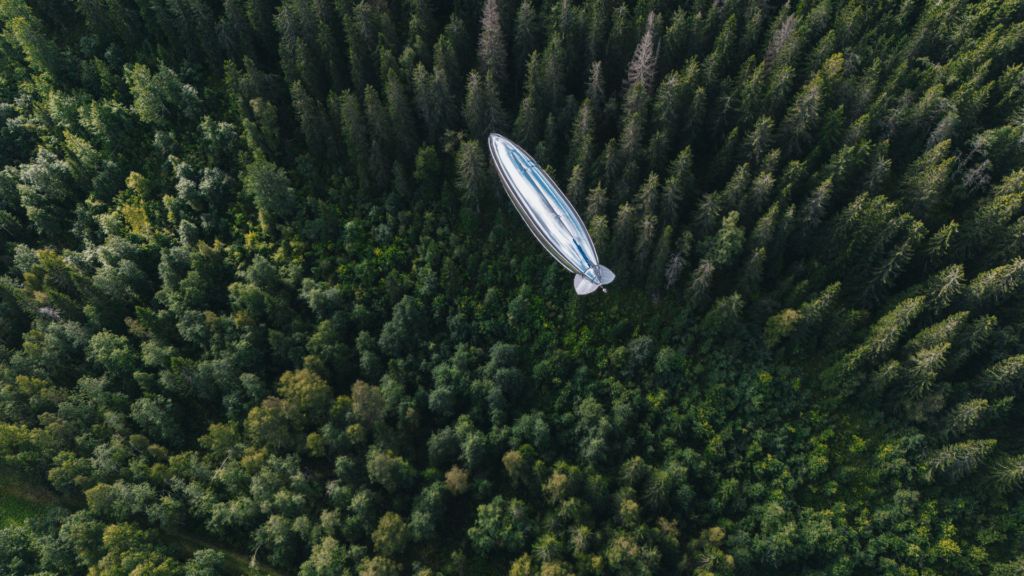
As global demand grows for persistent, real time surveillance across both defence and civilian domains, a Finnish deeptech innovator is taking to the skies with a new approach to aerial intelligence. Kelluu has secured €15 million in Series A funding to expand its autonomous airship fleet and advance its mission of building continuous, high precision monitoring systems.
Backed by Strategic Defence Investors
The funding round was led by the NATO Innovation Fund, marking its first investment in a Finnish company. Additional support came from Keen Venture Partners, GungnirCapital, and Tesi.
This investment follows Kelluu’s successful participation in two phases of Defence Innovation Accelerator for the North Atlantic, highlighting the growing strategic importance of its technology within the defence ecosystem.
Filling the Gap Between Satellites and Drones
Kelluu specialises in designing, manufacturing, and operating autonomous hydrogen powered airships capable of delivering intelligence, surveillance, and reconnaissance capabilities over extended periods.
Traditional aerial monitoring solutions often involve trade offs. Satellites provide wide area coverage but lack continuous, high resolution observation, while drones offer detailed imagery but are limited by flight time, weather sensitivity, and regulatory constraints.
Kelluu’s airships are designed to bridge this gap. They combine long endurance with high precision sensing, enabling missions that can exceed 12 hours while maintaining stable, continuous observation.
A fleet of five airships operating from a single base can monitor areas of up to 30,000 square kilometres, providing a scalable solution for large scale surveillance needs.
Silent, Sustainable, and High Precision
Powered by hydrogen, the airships operate with low emissions and minimal noise, making them suitable for deployment in sensitive or remote environments. Their ability to carry multiple sensing systems allows for the collection of real time, ultra high quality data across various applications.
This capability is particularly valuable for early threat detection, border monitoring, and infrastructure protection, where continuous situational awareness is critical.
By delivering persistent intelligence, Kelluu’s technology supports more efficient decision making and faster response times in both military and civilian contexts.
Expanding Beyond Defence Applications
Although initially developed with defence use cases in mind, Kelluu’s platform is designed as a dual use solution. Its applications extend to sectors such as forestry monitoring, meteorology, smart city infrastructure, and environmental protection.
The airships can also be used to create detailed digital twins of physical environments, offering cost effective alternatives to traditional manned aviation for large scale data collection.
This versatility positions Kelluu to address a wide range of challenges, from climate monitoring to urban planning.
Advancing AI Driven Geospatial Intelligence
As part of its long term vision, Kelluu is developing advanced capabilities through its AI research initiative, Kelluu AI Labs. The goal is to build geospatial foundation models that can interpret and analyse data from the physical environment at scale.
These models are expected to enhance the value of the data collected by the airships, enabling more sophisticated insights for applications in defence, infrastructure resilience, and environmental management.
Scaling Operations for the Future
The newly raised capital will be used to optimise Kelluu’s technology, expand its autonomous airship fleet, and scale operations across new markets. With increasing investment in European defence capabilities and a growing need for persistent monitoring solutions, the company is well positioned for growth.
By combining innovative hardware with advanced AI capabilities, Kelluu is redefining how aerial intelligence is delivered. Its approach offers a new layer of infrastructure that could play a critical role in strengthening security, improving resilience, and enabling smarter management of both natural and built environments.