
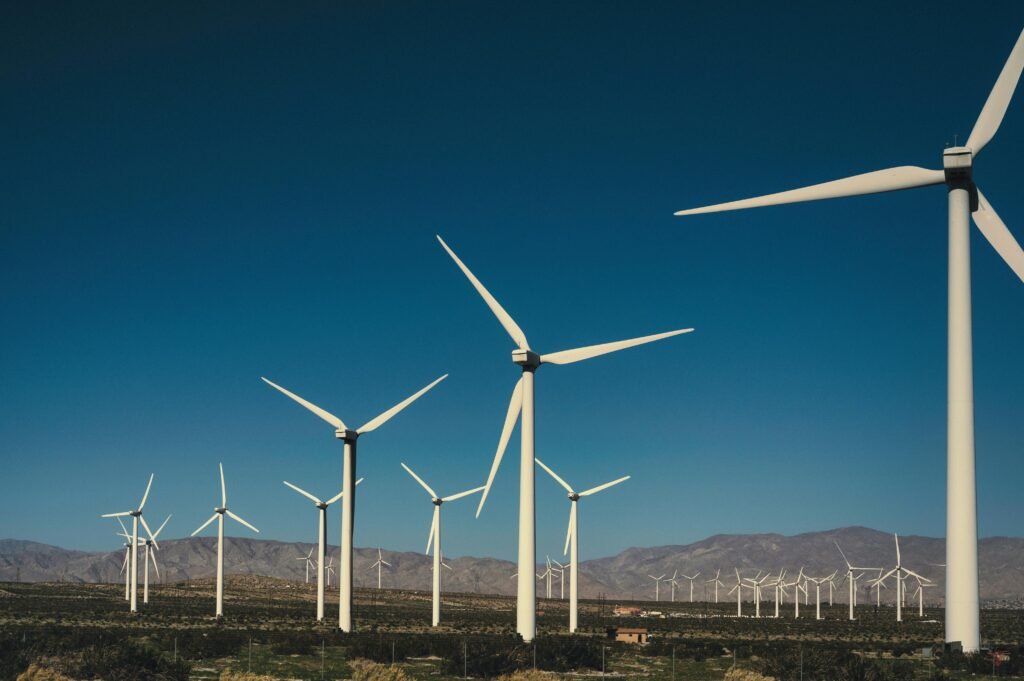
While other European capitals are building software-driven climate solutions, Copenhagen has ruthlessly focused on the physics of planetary decarbonisation. Denmark does not merely regulate green energy; it engineers and exports the heavy infrastructure required to power it. By the end of 2026, the Danish capital has successfully transitioned from a pioneer in legacy wind turbine manufacturing to an undisputed global laboratory for next-generation ClimateTech. By seamlessly integrating agile deep tech startups with the massive balance sheets of state-backed corporate titans, Copenhagen is solving the most capital-intensive bottlenecks in the global green transition.
For institutional investors evaluating the broader European tech landscape, the Danish model offers a stark contrast to traditional venture capital. While we previously analysed how Swedish VCs aggressively prioritise broad sustainability KPIs, the Danish ecosystem is hyper-specialised. Capital here is deployed into massive, mathematically proven industrial verticals: offshore wind optimisation, Power-to-X green hydrogen, and cross-border carbon capture.
The Offshore Wind Legacy and Ørsted’s Blueprint
Denmark’s climate monopoly is built on offshore wind. The nation erected the world’s first offshore wind farm in 1991, and that legacy has compounded into an unassailable engineering moat. The primary architect of this ecosystem is Ørsted, a company that executed one of the most profound corporate transformations in history, pivoting entirely from a state-owned oil and gas conglomerate into the world’s largest developer of offshore wind power.
However, in 2026, Ørsted is no longer just building turbines; it acts as the ultimate corporate venture client for Danish ClimateTech. Startups emerging from the Technical University of Denmark are not forced to build expensive prototype grids. Instead, they plug directly into Ørsted’s massive operational infrastructure. Startups developing autonomous drone fleets for offshore blade inspection, predictive AI for turbine maintenance, and advanced wake-effect fluid dynamics software are securing direct vendor contracts with Ørsted. This corporate clienting model provides deep tech founders with immediate, non-dilutive revenue and a globally recognised proof of concept, completely bypassing the notorious hardware death valley that plagues isolated climate startups.
Power-to-X and the Green Hydrogen Economy
Because Denmark produces so much offshore wind energy, it frequently generates massive electricity surpluses. Rather than curtailing this clean energy, Copenhagen has aggressively pivoted to Power-to-X, or PtX. This technology utilises excess renewable electricity to power electrolysis, splitting water into green hydrogen. This hydrogen can then be synthesised into green ammonia or e-methanol to decarbonise heavy industries that cannot simply be plugged into a battery.
The capital required to build these PtX facilities is staggering and fundamentally exceeds traditional venture capital’s capacity. To solve this, Copenhagen relies on mega-funds like Copenhagen Infrastructure Partners. Managing tens of billions of euros, CIP operates massive Energy Transition Funds dedicated entirely to scaling next-generation infrastructure. By injecting billions into Danish PtX scale-ups and facility developers, CIP ensures that Denmark is not just researching green hydrogen, but actively producing it at a commercial scale. This creates a highly lucrative B2B market for local startups building the highly specialised electrolyser membranes, sensor arrays, and grid-balancing software required to run these massive chemical plants safely and efficiently.
Carbon Capture and Storage: The Project Greensand Era
Even with full integration of renewable energy, certain heavy industries like cement and steel will continue to emit carbon. Acknowledging this reality, Denmark has boldly commercialised Carbon Capture and Storage technology. Rather than viewing the depleted oil and gas reservoirs beneath the North Sea as stranded assets, the Danish government and local tech consortia are repurposing them as permanent carbon vaults.
The flagship initiative driving this sector in 2026 is Project Greensand. Having completed its pilot phases, the project is now scaling up to store millions of tonnes of CO2 annually. Carbon captured from industrial sites across Europe is liquefied and transported via specialised vessels to the Danish North Sea, where it is injected deep beneath the seabed. This sovereign infrastructure project has spawned an entire sub-sector of Copenhagen-based startups. Engineering firms and software developers are securing massive rounds of funding to build the precise acoustic monitoring software, leak-detection AI, and carbon-accounting blockchains required to verify that the injected CO2 remains permanently sequestered.
Maritime Decarbonisation: The Maersk Catalyst
The final pillar of Copenhagen’s ClimateTech dominance is global shipping. Maritime transport accounts for nearly three per cent of global greenhouse gas emissions, and it is notoriously difficult to electrify. Enter A.P. Moller – Maersk, the Danish shipping behemoth. Maersk has aggressively committed to achieving net-zero greenhouse gas emissions across its entire business, placing massive orders for dual-fuel vessels capable of running on green methanol.
This corporate mandate has single-handedly guaranteed a market for the Danish Power-to-X sector. When a massive conglomerate like Maersk publicly guarantees the purchase of millions of tonnes of green e-methanol, it completely de-risks the capital expenditure for the startups and infrastructure funds building the production facilities. Furthermore, Maersk’s corporate venture arm aggressively funds early-stage maritime tech in Copenhagen. Startups developing AI-driven weather-routing algorithms, hull-friction-reduction materials, and alternative propulsion systems are heavily funded, knowing that a successful prototype will be deployed immediately across one of the largest shipping fleets on the planet.
A Sovereign Climate Monopoly
The Copenhagen ClimateTech ecosystem operates with a level of industrial coordination that simply does not exist in Silicon Valley or London. By aligning the aggressive, risk-taking culture of deep-tech startups with the massive balance sheets and guaranteed purchasing power of corporate titans like Ørsted and Maersk, Denmark has solved the scale bottleneck for green technology. For global limited partners and institutional investors, the 2026 reality is undeniable. Denmark is the physical factory floor for the European green transition.