
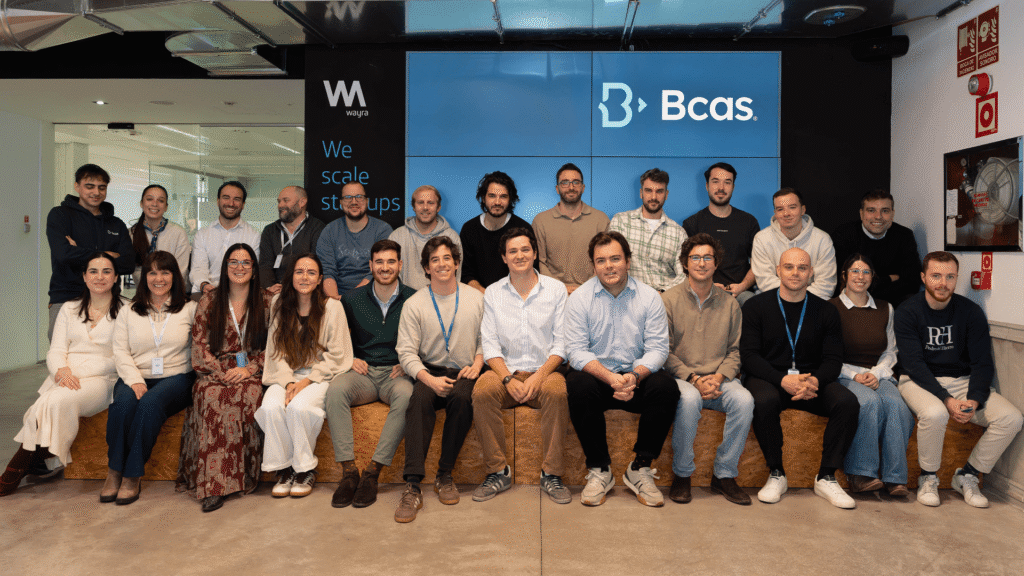
Spanish edtech startup BCAS is scaling its ambition to make education more accessible by securing a €30 million debt facility that strengthens its ability to finance students at scale. As demand for high employability training continues to rise across Europe, BCAS is positioning itself as a core infrastructure player in education finance, helping learners overcome upfront cost barriers while giving training providers more predictable enrolment and cash flow.
Expanding access to education finance
Founded in 2021 by Bosco González del Valle, Javier Ausín, and Manuel Avello, BCAS was built to address a structural problem in education. Many students are eager to reskill or upskill, particularly in fast growing digital and professional fields, but are blocked by high upfront tuition fees. BCAS enables students to access training without immediate financial pressure, allowing them to focus on learning and career outcomes rather than short term affordability.
Since launch, the company has financed more than 3,800 students and partnered with over 60 education providers. Its network includes well known digital schools and universities such as Ironhack, The Bridge, thePower, ISDI, 4Geeks, UNIR, EIP, and HACK A BOSS, covering a wide range of technology, business, and professional programmes.
A flexible financing model for modern learners
BCAS differentiates itself through a dual financing approach designed to match diverse student needs. One pillar of the model is the Income Share Agreement, where students begin repayments only after securing employment and reaching an agreed income threshold. This aligns incentives between students, schools, and the financing provider, particularly for career focused training programmes.
Alongside ISAs, BCAS offers affordable instalment based payment plans with competitive interest rates. These plans are aimed at students who prefer more traditional repayment structures but still need flexibility. By combining both options, BCAS provides a tailored financing toolkit that can adapt to different learner profiles and institutional requirements.
Fuel for scalable growth
The newly closed €30 million debt round was led by MyInvestor and is a strategic milestone for the company. Unlike equity financing, structured debt allows BCAS to expand its lending capacity without diluting ownership, which is critical for a business model built around financing volume.
According to Co CEO and co founder Javier Ausín, access to debt is fundamental to the company’s growth strategy. As BCAS scales, its capital requirements increase in parallel, and this facility enables the company to support thousands more students while expanding its product offering for both learners and training providers.
With this funding in place, BCAS expects more than 6,000 additional students to gain access to high employability programmes in the coming period.
Strengthening Spain and expanding Europe wide
BCAS currently operates in Spain and Germany, two markets with strong demand for alternative education pathways and professional reskilling. The company’s immediate focus is on consolidating its leadership position in Spain, where it has already established strong relationships with leading training institutions.
Once this foundation is reinforced, BCAS plans to accelerate its European expansion. The long term vision is to become a pan European education financing provider, supporting mobility, lifelong learning, and workforce transformation across multiple countries.
Building sustainable education infrastructure
Beyond growth metrics, BCAS positions itself as part of a broader shift toward more equitable and outcome driven education systems. By lowering financial barriers and aligning repayment with employment outcomes, the company aims to contribute to a more sustainable education ecosystem that benefits students, schools, and employers alike.
As structured funding becomes more central to edtech business models, BCAS stands out as one of the Spanish education technology companies demonstrating that scalable, debt backed financing can play a critical role in widening access to education across Europe.