
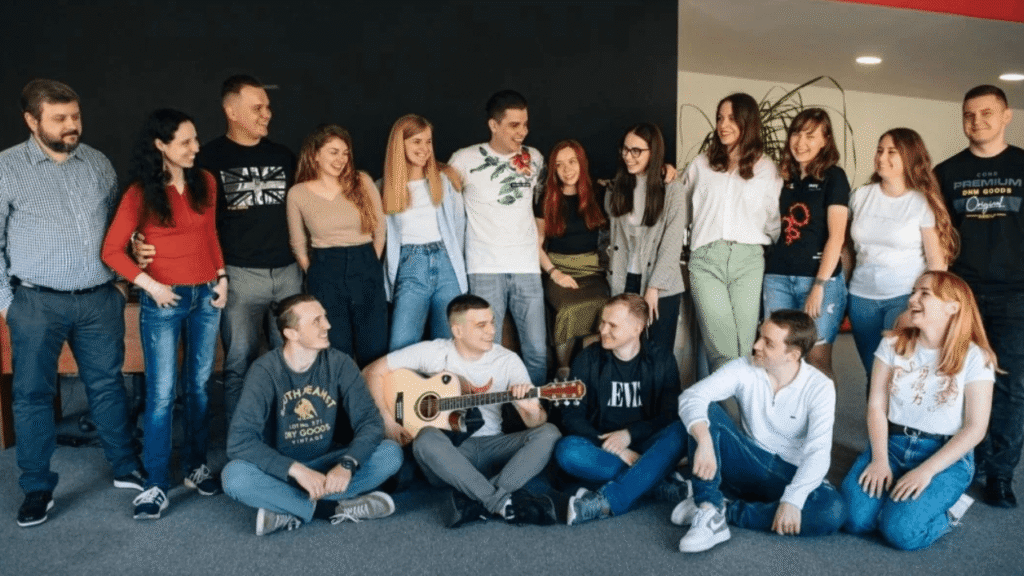
As tech companies worldwide cut more than 100,000 jobs in 2025, many are stripping back layers of management in pursuit of efficiency. While some organisations are reinventing themselves under pressure, others have been operating lean by design for decades.
One of them is Redwerk, a Kyiv-founded software development company that has quietly scaled into a global technology partner without venture capital, middle managers, or aggressive marketing. Founded in 2005, Redwerk builds and maintains custom digital products for clients around the world, taking a fundamentally different approach to growth and organisation.
Building software without bloat
Redwerk works across the full product lifecycle, designing and engineering web, mobile, desktop, and SaaS platforms. Its teams handle architecture, UX, development, quality assurance, deployment, and long-term support, often modernising legacy systems or building mission-critical platforms from scratch.
The company operates across sectors including e-government, healthcare, fintech, media, and online marketplaces. For startups, Redwerk acts as an extended product and engineering arm, helping founders validate ideas, build MVPs, and scale platforms without prematurely hiring large in-house teams.
This approach is reinforced by its build, break, perfect model, delivered alongside its sister QA brand. That structure has supported platforms for organisations ranging from global media companies and universities to public sector institutions.
A founder shaped by early computing
CEO Konstantin Klyagin’s path into software began early. He wrote his first program in BASIC at the age of eight, built a global bulletin board system as a teenager, and later created an early multi-protocol messaging client by reverse-engineering communication standards that still underpin modern platforms.
By 17, he was already working professionally in Ukraine’s outsourcing industry, observing management models and forming clear opinions on what worked and what didn’t. At 23, an international client discovered his open-source work and commissioned a SaaS product, which became the foundation of Redwerk.
From the start, the company grew organically, first in southern Ukraine, then in Kyiv, and eventually into international markets.
No middle managers by design
Redwerk’s most distinctive feature is its flat organisational structure. The company operates without traditional department heads or rigid hierarchies. Teams form around projects, and engineers, designers, and project managers collaborate as equals.
Communication is direct and transparent. Clients can speak directly with engineers when needed, and responsibility sits close to execution. The result is faster decision-making, lower overhead, and stronger ownership of outcomes.
Careers in a horizontal organisation
In a flat structure, career growth does not mean climbing a management ladder. Instead, progression comes through deeper expertise, broader responsibility, and long-term contribution.
Hiring is driven strictly by demand. Redwerk closely manages utilisation, aiming for around 70 percent billable time, which allows flexibility without overextending. Contractors and part-time contributors are often used before permanent hires, ensuring financial discipline and stability.
Teams are assembled dynamically, combining full-time and fractional roles depending on project needs. This flexibility keeps costs predictable for clients while allowing the company to adapt quickly to changing workloads.
Lessons from two decades without investors
Redwerk has never raised external funding. Everything has been financed through revenue, a choice that has shaped its culture and decision-making.
Four principles stand out. First, profit discipline matters. Spending is tied to affordability, not projections. Second, utilisation is more important than headcount. Third, diversification across industries and client sizes reduces risk. And fourth, small projects should never be underestimated, as they often grow into long-term partnerships.
After 20 years, Redwerk’s model looks increasingly relevant in a tech landscape reassessing scale, structure, and sustainability. What began as a founder-led experiment in lean software development now stands as a working example of how flat organisations can thrive without the weight of traditional corporate layers.