
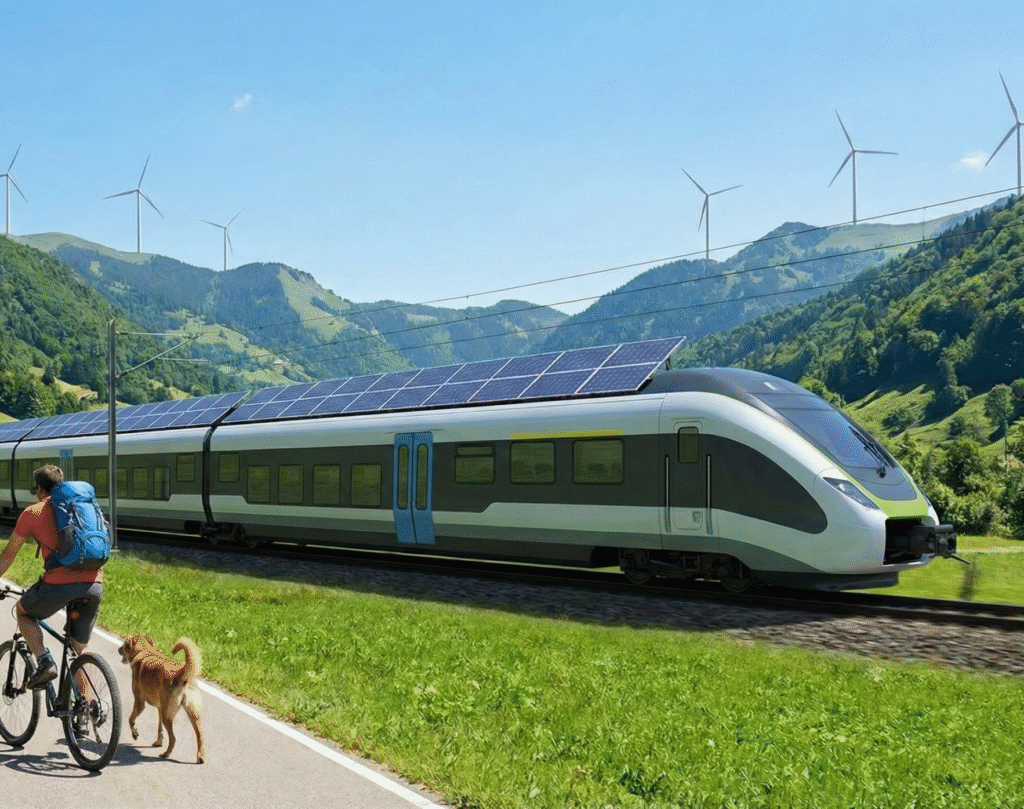
Carbon-neutral travel is no longer a distant dream for environmental activists but a practical reality being engineered by European startups today. While the aviation and shipping industries struggle to decarbonise their long-haul routes, a new generation of founders is focusing on the most overlooked part of the journey. The last mile refers to the final leg of a trip, such as the transit from a train station to a hotel or the commute through a dense city centre. This segment is often the most carbon-intensive per kilometre because it relies on idling taxis and inefficient private vehicles. This guide explores the technical innovations and strategic shifts that are finally making the entire travel chain sustainable from start to finish.
Why Carbon Neutral Travel Depends on Solving the Last Mile
The primary obstacle to achieving Carbon Neutral Travel is the fragmentation of local transport. When a traveller arrives in a new city, they often face a confusing array of petrol-powered options that undo the environmental benefits of their high-speed rail journey. This gap in the green infrastructure is why investors and city planners are prioritising last-mile solutions. By enabling seamless transitions between major transport hubs and final destinations, these startups are eliminating the need for internal combustion engines in urban environments. This focus on local efficiency mirrors how we see sustainable tourism metrics used to measure total impact rather than just parts of it.
The motivation behind these changes is both environmental and economic. European cities are increasingly implementing low-emission zones that penalise heavy polluters. This regulatory pressure is forcing travel brands to find cleaner ways to move their guests. Furthermore, modern travellers now expect a high level of environmental responsibility from the companies they support. If a luxury resort provides a diesel shuttle for its guests, it risks damaging its brand reputation among eco-conscious visitors. Solving the last-mile problem is therefore essential for maintaining competitive advantage in a market that values transparency and integrity.
Carbon Neutral Travel through Urban Air Mobility
One of the most ambitious ways to achieve Neutral Travel is by moving local transit into the sky. Traditional city transport is often slowed by traffic congestion, leading to high emissions and wasted time. The German startup Volocopter is solving this by developing electric vertical takeoff and landing aircraft. These vehicles act as zero-emission air taxis that can bypass ground traffic entirely.
The reason this technology is so effective for the last mile is its ability to land on small vertiports in the heart of the city. By using electricity to power multiple rotors rather than a single large engine, these aircraft are significantly quieter and safer than traditional helicopters. This allows them to operate in residential areas without bothering local citizens. Volocopter is currently working with airport operators across Europe to create air corridors that connect terminals directly to city centres. This ensures that the final leg of a business trip is as carbon-efficient as the rest of the journey.
Solving Last Mile Friction with Multimodal Platforms
The Estonian startup Bolt has become a leader in carbon-neutral travel by integrating different types of transport into a single digital platform. They realised that the best way to reduce emissions is to give people an alternative to owning a private car. Their app allows users to switch between electric ride-hailing,, e-scooters, and e-bikes depending on the distance of their trip.
This multimodal approach is essential because it addresses the diverse needs of travellers. A person might take an electric car for a trip with heavy luggage but switch to a scooter for a quick meeting across town. By aggregating these options, Bolt makes it easier for travellers to choose the most efficient tool for every specific task. Their strategy uses data to predict where demand will be highest, ensuring that electric vehicles are always available when needed. This level of coordination is similar to the predictive logic used for finding cheap flights with AI, where software optimises resources to save the user money and time.
Sustainable Water Transit and the Future of Coastal Cities
For cities with significant waterways, the last-mile problem often involves ferries and water taxis that burn heavy fuel. The Swedish startup Candela is revolutionising this sector by building electric hydrofoil boats. These vessels use computer-controlled wings to lift the hull out of the water, reducing friction by 80%.
The reason Candela is a game-changer for carbon-neutral travel is the efficiency gains enabled by its hydrofoil design. Most electric boats are limited by the weight of their batteries, but because Candela uses so little energy, it can achieve high speeds and long ranges. This makes it a viable replacement for the diesel ferries that currently clog European harbours from Venice to Stockholm. By gliding silently above the waves, these boats protect local marine life and provide a much more comfortable experience for passengers. Their technology proves that even the most difficult environments can be decarbonised with enough engineering ingenuity.
Micromobility Networks and the Human-Centred City
The Berlin based company Tier is tackling the last mile by focusing on modularity and battery swapping. One of the hidden environmental costs of electric scooters is the need for vans to collect them for charging every night. Tier solved this by creating scooters with swappable batteries that can be changed on the spot by employees using electric cargo bikes.
This operational shift is a critical component of Carbon Neutral Travel because it eliminates the emissions associated with the maintenance of the fleet. Tier also encourages users to take responsibility for the environment by offering rewards for parking in designated areas or for switching batteries themselves. This community led model ensures that the hardware is integrated into the city in an orderly way rather than being seen as a nuisance. Their focus on the lifecycle of the vehicle from sustainable manufacturing to efficient recycling sets a high bar for the rest of the industry.
The Strategic Importance of Integrated Infrastructure
The success of these startups depends on their ability to work with local governments to create a unified transport network. Carbon Neutral Travel cannot happen in a vacuum. It requires a physical environment that supports electric charging and dedicated lanes for lightweight vehicles. European hubs like Amsterdam and Paris are leading the way by removing car parking spaces and replacing them with charging hubs and green corridors.
This partnership between private innovation and public policy is what makes the European ecosystem so resilient. When a startup like Bolt or Tier enters a new market they are not just providing a service but helping to redesign the city. This holistic view of the travel experience ensures that the transition to net zero is both fast and inclusive. By making green options the most convenient and affordable choice these companies are changing human behavior on a massive scale.
Conclusion
Carbon Neutral Travel has transformed from an abstract goal into a measurable industrial process. By focusing on the how and why of last mile emissions startups like Volocopter and Bolt and Candela and Tier are proving that the final leg of a journey can be the most innovative. Whether it is through urban air mobility or multimodal platforms or hydrofoil technology these firms are providing the tools we need to explore the planet without destroying it. The shift toward data driven and electric infrastructure is making our cities quieter and cleaner and more efficient. As these technologies continue to mature the ability to move seamlessly through a carbon neutral world will become the standard for every traveler. The power to change the future of transport is already in our hands and it is being driven by the intelligence of the European startup scene.